

Nevada Affidavit of Death of a Joint Tenant.
When a co-owner or spouse passes away, the home may already be yours by right of survivorship — but their name stays on the title until it’s cleared, which can hold up a sale or a refinance. We prepare your affidavit, attach the certified death certificate, and record it with the county for you. No probate, a flat fee, and care at a hard time.
Removing a deceased co-owner from the title
In Nevada, you remove a deceased co-owner from a property title by recording an Affidavit of Death of Joint Tenant, together with a certified copy of the death certificate, in the county where the property sits. Because joint tenancy carries a right of survivorship, the surviving owner already owns the property — so there is no probate; the affidavit simply clears the deceased owner’s name from the public record.
TruPoint prepares the affidavit and sets out what Nevada law requires — the affiant’s relationship to the person who died, the deed that created the joint tenancy or right of survivorship, a description of the property, and the date and place of death — then attaches the certified death certificate, arranges notarization, and e-records it with the county.
There is no sale here, so no Real Property Transfer Tax applies. You pay our flat preparation fee plus the county’s recording fee, and you receive the recorded copy for your records — no attorney retainer, no court.

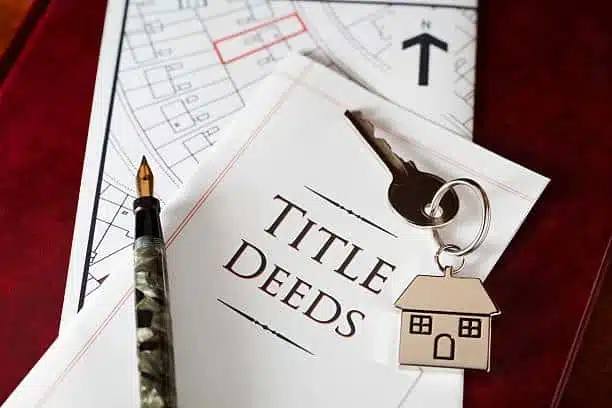
You may own it already — but the record says otherwise.
With a right of survivorship, the home passes to you the moment a co-owner dies. The public record, though, still lists the person who passed — and until that name is cleared, the property’s marketability is impaired.
- A sale or refinance can stall while the deceased owner’s name is on title.
- Title companies and lenders want recorded proof of the death first.
- Recording the affidavit clears it — no probate, no court.
It’s a straightforward filing, and getting it on record is what lets you move forward when you’re ready.
Why a do-it-yourself affidavit is a gamble with your title.
An affidavit of death of joint tenant looks like a short form — which is exactly why people try it themselves, or assume a title company will sort it out. The form looks finished; the problem shows up later, when you go to sell or refinance. You can certainly prepare and record your own — just understand what’s at stake.
Escrow won’t do this for you
Escrow and title companies open for a sale, a purchase, or a refinance — a transaction with a buyer and a price. Clearing a deceased co-owner’s name is none of those, so it falls outside escrow entirely.
An error clouds the title
The affidavit has to match the deed’s legal description and vesting and state exactly what Nevada requires — the relationship, the instrument that created the survivorship, the property, and the date of death. One wrong detail, and the deceased owner’s name isn’t cleared.
Fixing a cloud means court
Once title is clouded, clearing it usually takes a court action to quiet title in district court — with its own complaint, a recorded notice of the lawsuit, service on every interested party, and a hearing a judge must hold.
Three steps, and the title is yours alone.

We confirm how title is held
We review the current deed to confirm the property is held in joint tenancy with right of survivorship — the detail that lets the affidavit do its job.
We prepare the affidavit
We draft the affidavit, set out what Nevada requires, attach the certified death certificate, and arrange notarization for the surviving owner to sign.
We record it for you
We e-record it with the county and return your recorded copy — typically within one to three business days, in any Nevada county.
A short list, and we take it from there.
- A certified copy of the deceased co-owner’s death certificate.
- The current recorded deed, showing how title is held — we can pull it for you.
- The property address — we’ll locate the legal description.
A Registered Document Preparer, not a paralegal service.
Every affidavit is prepared by Quinnie Do, a registered and bonded Nevada Document Preparation Service and a Notary Public — with care for families who are handling a loss, and service in English and Vietnamese.
She sets out exactly what Nevada law requires to clear title by survivorship, attaches the certified death certificate, arranges notarization, and e-records with the county — accurately, transparently, and at a published flat fee. You can confirm the registration with the Secretary of State.

Handle the home when you’re ready.
There’s no rush the moment a loved one passes. But when you’re ready to sell, refinance, or simply put the title in your name alone, we make that step calm and clear.
Flat pricing, plain answers, and the recording handled for you. If more than one property is involved, we prepare an affidavit for each.

Know the price before we begin.
Affidavit of death of joint tenant, answered plainly.
It’s a document recorded with the county that removes a deceased co-owner’s name from the title to real property held in joint tenancy. Because joint tenancy includes a right of survivorship, the surviving owner already owns the property — recording the affidavit, with a certified death certificate, simply clears the public record, without probate.
You record an Affidavit of Death of Joint Tenant, together with a certified copy of the death certificate, in the county where the property is located. The affidavit states the affiant’s relationship to the person who died, the deed that created the joint tenancy, the property, and the date and place of death. TruPoint prepares it, arranges notarization, and e-records it for you.
Yes. Property held in joint tenancy passes automatically to the surviving owner through the right of survivorship, so it does not go through probate. The affidavit is simply how the public record is brought up to date in Nevada.
No. The Real Property Transfer Tax applies to a sale or a change of ownership for value. Here there is no sale — title passes by right of survivorship — so no transfer tax is due. You pay only our flat preparation fee and the county’s recording fee.
A certified copy of the death certificate, the current recorded deed showing how title is held, and the property address. If you don’t have the deed or the legal description, we can locate them for you.
Preparation is a flat $225. Electronic recording is $50 and notary is $15 per signature, with the county recording fee (about $42 in Clark County) collected at intake. Once we have your documents, we e-record with the county and return your recorded copy, typically within one to three business days, in any Nevada county.
A person with knowledge of the death — typically the surviving owner — signs it before a notary, confirming the co-owner’s death and the right of survivorship. We prepare it for signing and can arrange the notarization.
Often, yes. If spouses held title as joint tenants, this affidavit clears the deceased spouse’s name. If the home was held as community property with a right of survivorship, a similar survivor affidavit applies — we review your deed and prepare the right one for your situation.
A wrong legal description, the wrong vesting, or a missing required statement can fail to clear the deceased owner’s name — leaving a cloud on the title that the record can’t fix on its own. Clearing it can then take a court action to quiet title, which costs far more than preparing the affidavit correctly. We confirm the details against your recorded deed before anything is filed.
Yes. We e-record in every Nevada county — Clark, Washoe, Carson City, Douglas, Lyon, Nye, and the rest — so it doesn’t matter where the property sits. You don’t need to travel to a recorder’s office or mail anything yourself.
If three or more people held the property in joint tenancy and one passes away, the deceased owner’s share is cleared and the property remains with the surviving joint tenants. The remaining owners sign the affidavit, and we prepare it to reflect everyone correctly.
Let’s get the title in your name.
Reach out when you’re ready, and we’ll tell you exactly what’s needed and the flat fee before any work begins — in English or Vietnamese.
I am not an attorney in the State of Nevada. I am not authorized to give legal advice or legal representation. I may not accept fees for giving legal advice or legal representation.
TruPoint Deed Services · TruPoint LLC, a registered Nevada Document Preparation Service (NRS Chapter 240A) · 8784 S. Maryland Pkwy, Suite 105, Las Vegas, NV 89123 · (408) 766-3532 · info@trupointdeeds.com