
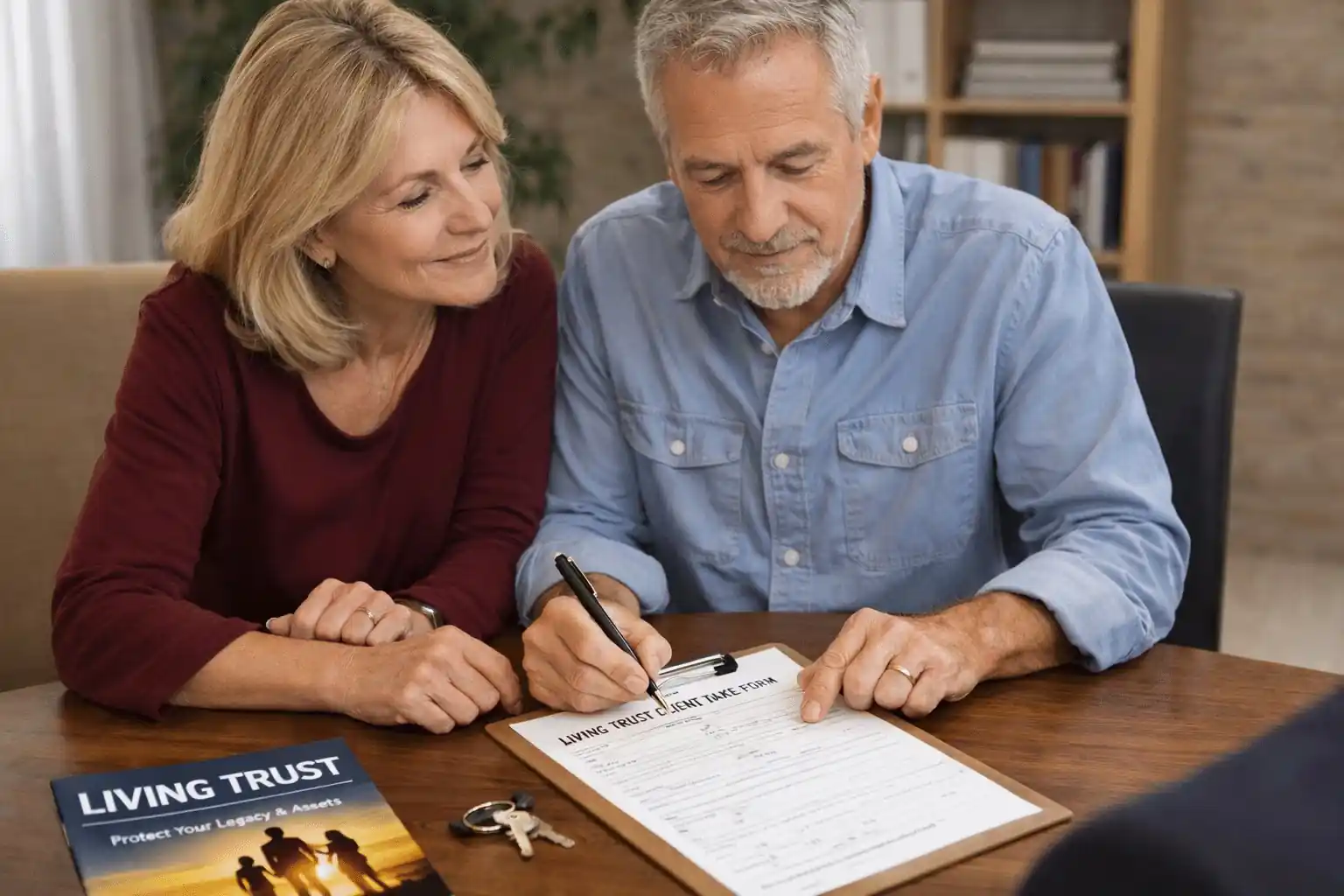
You paid for a living trust. You signed it. It is sitting in a folder in a drawer. And there is a real chance it owns nothing at all.
This is the most expensive misunderstanding in estate planning, and it is remarkably common. A trust is a container. Signing the document creates the container. It does not put anything inside it.
What funding actually means
For a house to be inside your trust, a deed has to transfer the property from you personally into the trust, and that deed has to be recorded with the county where the property sits. That step is called funding.
If nobody recorded that deed, the county still shows the house in your own name. When you die, the trust cannot pass what it never owned — and the property goes through exactly the probate you paid to avoid.
How to check in one step. Pull your recorded deed and read the owner line. If it names you personally rather than your trust, the house is not in the trust. We retrieve it and read the vesting for $30.
Why this happens so often
Online trust services and software packages produce the trust document and stop there. Some include a blank deed form and leave the recording to you. Most people assume the hard part is the trust and that the deed is a formality — so it never gets done.
It also happens with properly drafted trusts. A house bought after the trust was signed does not join it automatically. Every property acquired later needs its own funding deed.
The other half nobody mentions
Real property is funded by a recorded deed. Bank and brokerage accounts are funded differently — the institution retitles them, and before it will, it wants a Certificate of Trust.
That is a short document proving the trust exists and that you have authority to act, without handing the bank the full terms of who inherits what. We prepare one for $200. Plenty of people with a signed trust have neither the funding deed nor the certificate, which means neither the house nor the accounts are actually in it.
Fixing it costs less than you think
- Retrieve the recorded deed and confirm the vesting — $30
- Trust funding deed with the Declaration of Value — $250
- Certificate of Trust for banks and brokerages — $200
- County recording fee — an estimated $50
- Transfer tax — generally nil, as transfers into your own trust without consideration are exempt
A funding deed is $250 and takes a day to draft. Probate on the same house costs considerably more and takes months. The gap between those two numbers is the entire reason this article exists.
If the person who created the trust has already died
Then the check matters even more urgently. If the house was properly funded, the successor trustee records an Affidavit of Successor Trustee at $250 and the trust works as intended. If it was never funded, the property is part of the estate and the route is different. Either way, reading the recorded deed is the first step.
Check whether your trust owns your house
Send us the property address. We pull the recorded deed, read the vesting and tell you plainly whether the funding deed was ever recorded. If it was not, we prepare and e-record it for $250 in any of Nevada’s 17 counties. All of it remotely — you sign from home by video with our partner’s registered Nevada online notary ($25 per signature), and we file it.
Start the Intake Form Call (702) 965-3030TruPoint LLC is not a law firm and does not give legal advice. We prepare documents at your direction. Whether a particular trust suits your circumstances is a question for a Nevada attorney.
Leave a Reply