
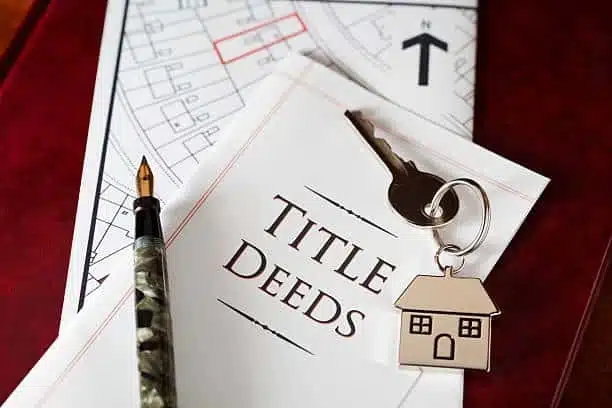
Two deeds, both about $250, both transfer a Nevada property. The difference is what the person signing promises — and that difference only shows up when something goes wrong.
If you are moving a house between family members, adding a spouse or cleaning up title, you will meet both names. Here is what actually separates them, without the jargon.
The quitclaim deed: no promises
A quitclaim deed transfers whatever interest the signer happens to have. If they own the whole property, the whole property moves. If it turns out they owned nothing, nothing moves — and you have no claim against them, because they never promised they owned anything.
That sounds alarming until you see where it is used. Between people who already know exactly what they own, the absence of promises does not matter. A spouse being added. An ex-spouse being removed under a divorce decree. A parent moving a house to a child. A homeowner deeding property into their own trust.
The grant, bargain and sale deed: limited promises
Nevada’s standard conveyance is the grant, bargain and sale deed. By statute those words carry built-in covenants: that the grantor has not already conveyed the property to somebody else, and that the property is free of encumbrances the grantor created.
It is not a full warranty deed — the grantor is not guaranteeing the entire history of the title back to statehood. But it is more than nothing, and it is what a buyer paying money generally expects.
The short version. Money changing hands between parties who are not family usually calls for a grant, bargain and sale deed. Transfers between people who already trust each other, where no money moves, are usually done by quitclaim.
Where people get it wrong
Using a quitclaim in a sale. A buyer who pays for a house and takes a quitclaim has no recourse against the seller if a title problem surfaces. Sellers sometimes prefer this. Buyers rarely should.
Thinking the deed type changes the tax. It does not. Nevada’s Real Property Transfer Tax is decided by the relationship and the consideration, not the instrument. A quitclaim between spouses is exempt. A quitclaim selling an interest for money is taxable. Same document, different outcome.
Thinking a deed removes a mortgage. Neither deed touches the loan. The person on the note stays on the note until it is refinanced or paid.
What both deeds need to record
- Names exactly as they appear on the current recorded deed
- The full legal description, copied from the record rather than the tax bill
- The assessor’s parcel number
- A completed Declaration of Value, required on every Nevada transfer
- Notarization, signed in the notary’s presence
A mismatch in any of those is the usual reason a Nevada recorder returns a deed. If you do not have your current deed, we retrieve it for $30 so the new one matches the record exactly.
What each costs
Both are $250 with the Declaration of Value included. Same-day e-recording is $50, notarization through our Las Vegas partner is $25 per signature by video from home, or, in person for South Las Vegas residents, $15 for the first signature and $7.50 for each additional, and the county recording fee is an estimated $50. Transfer tax depends on the transfer, not the deed — and a great many family transfers are exempt.
So which one do you need?
That decision stays with you, and we will not make it for you — that is legal advice, and a registered document preparer does not give it. What we will do is explain plainly what each instrument does and does not do, prepare the one you direct, and tell you when a situation genuinely calls for an attorney.
Not sure which fits your transfer?
Tell us what you want to happen with the property. We explain what each deed does, confirm the names against the county record, and prepare the one you choose for $250 — e-recorded in any of Nevada’s 17 counties. Entirely remote — sign from home by video with our partner’s registered Nevada online notary ($25 per signature), and we handle the filing.
Start the Intake Form Call (702) 965-3030TruPoint LLC is not a law firm and does not give legal advice. We prepare documents at your direction. Which instrument suits your situation is your decision, and where it turns on a legal question we will say so.
Leave a Reply